Electric motors play a crucial role in modern technology. They convert electrical energy into mechanical energy, powering everything from kitchen appliances to electric vehicles. Dr. Emily Carter, a leading expert in the electric motor industry, once stated, "The efficiency of electric motors is key to our energy future." This highlights their significance in sustainable energy solutions.
Understanding how an electric motor works is essential for innovation. These devices utilize electromagnetic principles to generate motion. However, not all electric motors operate at their peak efficiency. Factors such as design flaws and material quality can hinder performance. Encouraging further research in this area can lead to improved designs and greater energy savings.
The importance of electric motors cannot be overstated. They are fundamental to numerous applications, making our lives more convenient. As we advance toward a greener future, mastering electric motor technology will become increasingly vital. This calls for rigorous study and thoughtful reflection on current practices within the industry.
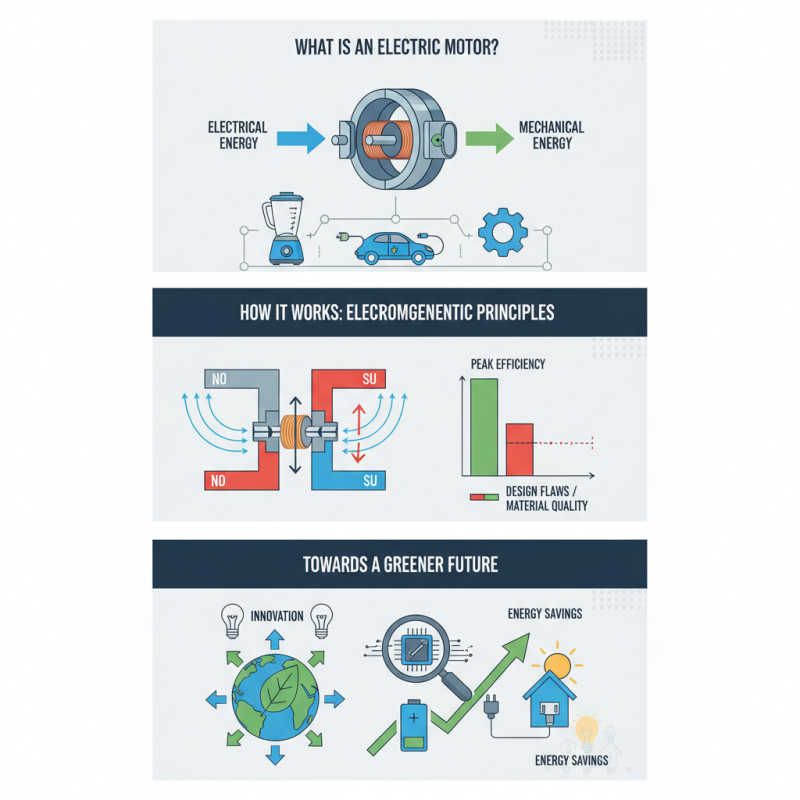
An electric motor is a machine that converts electrical energy into mechanical energy. It operates on the principle of electromagnetism. When electricity flows through a coil, it creates a magnetic field. This field interacts with magnets within the motor, producing rotation.
The main parts of an electric motor include the rotor, stator, and commutator. The rotor is the rotating component, while the stator is stationary. In AC motors, alternating current flows, causing the rotor to turn continuously. In DC motors, the commutator switches the direction of the current, allowing for consistent motion.
Understanding electric motors involves examining how energy is transformed. While they are efficient for many applications, motors can suffer from energy losses due to heat and friction. Consider the environmental impact as well. The materials used in construction often require resource-intensive processes. These aspects highlight both the versatility and complexity of electric motors.
The journey of electric motors began in the early 19th century. The first practical electric motor was built by Michael Faraday in 1821. Faraday’s experiments with electromagnetism laid the groundwork for the development of electric motors. His pioneering work demonstrated how electric current could produce motion. This concept soon evolved into various designs.
As time progressed, advancements were made. For example, Joseph Henry created a more efficient motor in the 1830s. The introduction of the commutator by Thomas Davenport in 1834 led to improved functionality. According to a 2021 report by the International Electrotechnical Commission, the global electric motors market was valued at approximately $120 billion. This growth indicates the increasing reliance on electric motors in numerous industries.
Tips: When considering an electric motor, think about the application. Factors like size and efficiency matter. Also, staying updated on industry trends can provide insights into future developments. Remember, not all electric motors are the same. Assessing specific needs is essential.
Electric motors are essential in various applications, from household appliances to industrial machinery. Understanding the basic components of electric motors can enhance your appreciation of their functionality. The main parts include the stator, rotor, and commutator. The stator is the stationary part, providing a magnetic field. The rotor, positioned within the stator, rotates to convert electrical energy into mechanical energy.
The stator consists of coils of wire or permanent magnets. These generate a magnetic field when electricity flows through them. According to industry reports, around 70% of global electricity consumption is attributed to electric motors. This highlights the need for efficiency in design and operation. The rotor, often made of conductive material, interacts with the stator’s magnetic field. This interaction creates rotational motion.
Tips: Always consider the environment when designing electric motor systems. Efficient designs can reduce energy consumption and costs. Additionally, regular maintenance is crucial. Faulty components can lead to increased energy use and decreased performance. Remember, even small adjustments can lead to significant improvements in efficiency.
Electric motors are remarkable devices that convert electrical energy into mechanical energy. This transformation occurs through electromagnetic principles. When electricity flows through coils in the motor, it generates a magnetic field. This interaction turns the rotor, producing mechanical motion. According to the International Energy Agency, electric motors account for approximately 45% of global electricity consumption. Therefore, understanding their operation is crucial for improving efficiency.
In an electric motor, the rotor's movement results from the interaction between the magnetic field and the current. The magnetic field acts like a magnet, attracting and repelling parts of the rotor. The process runs smoothly, but various factors can hinder efficiency. For instance, excess heat or friction can lower performance. According to a report by the U.S. Department of Energy, enhancing motor efficiency by just 1% can save significant energy, translating to millions of dollars.
Tips: Regular maintenance of electric motors is vital. Inspecting for wear and tear can identify potential issues. Small adjustments can keep motors running efficiently. Additionally, choosing the right motor for specific applications can make a noticeable difference in performance. Always evaluate the load and operating conditions. Each application's needs may differ.
Electric motors come in various types, each serving different functions. One common type is the AC motor, widely used in household appliances. These motors run on alternating current and are efficient for both residential and industrial applications. Another popular type is the DC motor, which operates on direct current. DC motors are ideal for applications requiring precise speed control, like in electric vehicles.
Understand your application before choosing a motor. Think about the power requirements and the environment where it will be used. Consider the torque and speed needed as well. Each motor type has unique characteristics that can affect performance. For example, AC motors are generally more durable than DC motors but may not provide the same speed control.
Tip: Always consult technical specifications when selecting a motor. This ensures you make a well-informed decision. Don't overlook maintenance; regular checks can prolong the motor's life. Using the wrong motor can lead to inefficiency and unexpected breakdowns.
Lastly, awareness of your motor's limitations is crucial. Some may not perform well in extreme temperatures or high humidity. Unforeseen factors like these can hamper efficiency and durability over time. Always remain vigilant about the operating conditions to avoid costly repairs.
: An electric motor converts electrical energy into mechanical energy using electromagnetism principles.
The key parts are the rotor, stator, and commutator. The rotor rotates while the stator stays still.
AC motors use alternating current and provide continuous rotation. DC motors use direct current for precise speed control.
Assess power requirements, torque, speed, and operational environment. Each motor type has unique characteristics.
Perform regular maintenance and checks. This helps prevent inefficiency and unexpected breakdowns.
Yes, the materials used can be resource-intensive. Consider the environmental impact when choosing a motor.
Motors may not perform well in extreme temperatures or high humidity. These factors can affect efficiency and longevity.
While motors are generally efficient, energy losses from heat and friction can occur. Awareness can improve performance.
Using an inappropriate motor can lead to inefficiency and increased risk of damage, resulting in costly repairs.
Evaluate your specific needs, including speed control and application settings. This ensures better performance and efficiency.
An electric motor is a vital device that converts electrical energy into mechanical energy, enabling a wide range of applications in modern technology. The historical development of electric motors has evolved significantly, from early prototypes to sophisticated designs used today. Key components of electric motors include stators, rotors, and commutators, which work together to facilitate this energy conversion process.
There are various types of electric motors, such as AC and DC motors, each serving distinct purposes across industries. Their applications range from household appliances to industrial machinery, showcasing the versatility and importance of electric motors in everyday life. Understanding how these motors function and their diverse types is crucial for leveraging their capabilities in innovative ways.

Sunvim Motor